part 1 of a 2-part series on getting better at trusting yourself
THINK for a moment about whether you believe in yourself.
Not in your ability to know a lot of things or have the answers to hard questions necessarily but rather in your capacity to befriend yourself even if you don’t.
You see, of all the mental and emotional conundrums that find their way into my practice, the one that cuts across all areas of a person’s life and undermines well-being almost more than anything else I see is: not knowing how to trust oneself.
We can call it a personal mistrust or distrust. Or just an estrangement from the deeper parts of who we are. Whatever we call it, second or third guessing ourselves can make navigating adult life slippery at best and downright torturous at worst. Disconnection from our most basic life gauge can leave us feeling as though we have a destination in sight but like a boat missing its rudder, we are unable to steer the course of our lives to get there.
Self-trust is the foundational building block upon which all other successes are built and that includes successful adult living. It’s the essential ingredient that enables us to navigate life’s challenges with confidence, resilience, and authenticity.
Why Self-Trust Matters. A lot.
Self-trust is the ability to have confidence in our own thoughts, feelings, and actions. It can manifest in various ways and its inner dialogue can sound like, “I know this is challenging but I can handle it.” “It may take some time and practice, but I can land on my feet.” “I am unsure of my next step, but I’m willing to ask for support.”
By tuning in and listening to our inner voice, we can begin to oust our critical one, and, in its place, welcome a more encouraging, supportive, and affirming way of speaking to ourselves.
Self-Talk That Is Encouraging
1. “I’ve done this before.” – A sense of confidence and capability.
2. “I can handle this.” – A feeling of resilience and adaptability.
3. “I trust my instincts.” – A sense of faith in one’s own intuition.
Self-Talk That Is Reflective
1. “What can I learn from this experience?” – This focuses on growth and self-improvement.
2. “What are my strengths and weaknesses?” – This is a willingness to acknowledge and work with one’s limitations, while neither embellishing nor devaluing them.
3. “What are my values and priorities?” – This strengthens autonomy and brings a sense of clarity and direction.
Self-Talk That Is Validating
1. “I’m doing my best.” – This fosters a sense of self-acceptance and self-compassion.
2. “I’m worthy of trust and respect.” – This brings a sense of self-worth and self-respect.
3. “I can make mistakes and still be okay.” – This promotes a sense of self-forgiveness and resilience.
Self-Talk That Aids In Decision-Making
1. “What are my options?” – This can lead to a sense of exploration and consideration. It can point the way to possibility.
2. “What feels right for me?” – This harnesses a sense of intuition and self-awareness.
3. “I can make a decision and adjust course if needed.” – This cultivates a sense of flexibility and adaptability.
*Why Some People Struggle with Self-Trust*
So, why do some people struggle to develop self-trust? There are many reasons, here are a few:
1. Childhood experiences: Trauma, neglect, overly critical or harsh parenting can erode self-trust, autonomy, and independence.
2. Negative self-talk: Criticizing oneself, a learned behavior, can undermine confidence, self-respect, and self-trust.
3. Fear of failure: The fear of making mistakes or failing can lead to self-doubt, tentativeness, and a lack of self-trust.
4. External validation: Relying too heavily on external validation or approval can undermine self-trust.
*Cultivating Self-Trust*
Fortunately, self-trust can be developed and strengthened over time. Consider practicing these strategies if you desire to grow more secure within yourself:
1. Practice self-reflection: Take time to reflect on your thoughts, feelings, and actions. In other words, be more curious about yourself and less judgy.
2. Develop a growth mindset: View challenges as opportunities for growth and learning. See more possibilities, fewer walls.
3. Cultivate self-compassion: Treat yourself with kindness, understanding, and patience. Show yourself more gentleness, less harshness.
4. Trust your instincts: Pay attention to your gut feelings and intuition. Tune in more, block out less.
5. Take small risks: Start with small, low-stakes decisions and gradually work your way up to bigger challenges. Do more experimenting, less avoiding. Start with people you feel safest with.
In Essence:
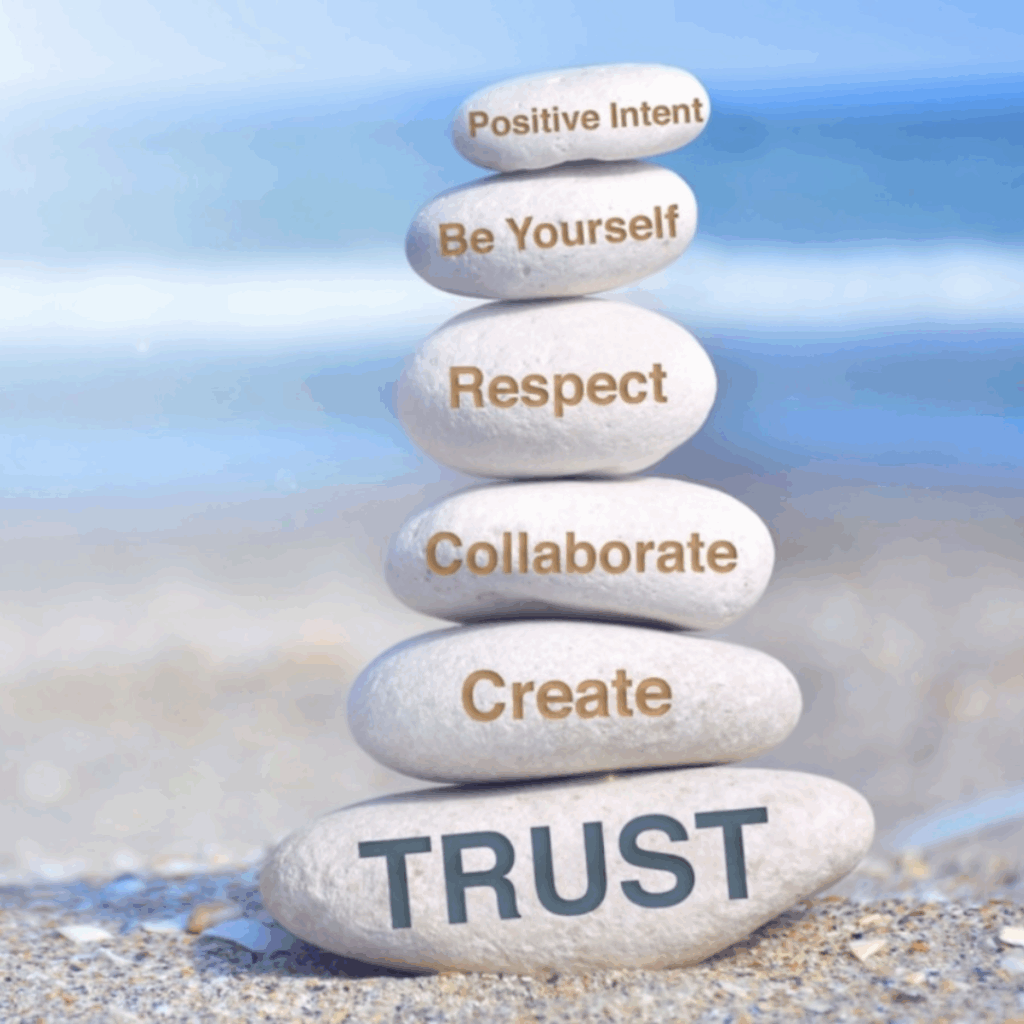
Trust is the foundation, the first and most important tier of our psychological and emotional development. The stronger we become in our ability to trust in ourselves (rooted in a basic trust in our early caregivers), the better able we are to handle the rigors, challenges, and weight of our adulthood. The more we are able to do this, the more emotionally free we become to enjoy life, see the beauty in it, and know that each of us is an integral part of what makes it worth living.